
WASTEWATER CONTAMINANT REMOVAL RESOURCES
-

Produced water is far from ordinary wastewater. It typically contains high concentrations of dissolved salts, residual hydrocarbons, suspended solids, heavy metals, chemical additives, and naturally occurring contaminants. Without proper treatment, managing these complex waste streams becomes both environmentally risky and financially burdensome.
-

Decentralized advanced wastewater treatment has become an increasingly effective solution for a wide range of commercial facilities. Fortunately, modern advanced treatment systems provide highly effective, customizable, and cost-efficient solutions that can be tailored to the unique operating characteristics of each commercial site while meeting demanding environmental performance standards.
-

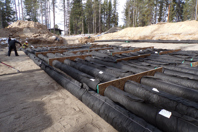
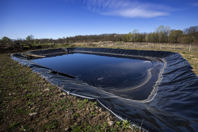
High-density polyethylene (HDPE), linear low-density polyethylene (LLDPE), and reinforced polypropylene (RPP), among other materials, all show up on municipal wastewater and manure lagoon liner projects. Each of these lagoon liners has a place, and the differences aren't just chemistry on a datasheet; they show up physically on site.
-

Discover how ion exchange technology effectively removes radioactive uranium isotopes from municipal wastewater. This case study explores the transition from pilot studies to full-scale remediation, highlighting the importance of technical support in meeting stringent local water quality standards.
-
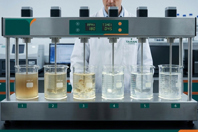
 Polyacrylamide (PAM) selection in industrial wastewater treatment is frequently reduced to a trial-and-error exercise, resulting in reagent waste, inconsistent effluent quality, and inflated operating costs. This article presents a structured framework for PAM optimization across three critical variables — ionic charge density, molecular weight, and coagulant synergy.
 -

Return activated sludge pumps are critical to wastewater treatment, maintaining biological balance, ensuring efficiency, and supporting resilient infrastructure amid aging systems and emerging contaminants.
-

Traditional gravity sewers rely on large-diameter mains, deep trenches, and often multiple lift stations — elements that carry significant capital and restoration costs, particularly in rural or rugged terrain. To improve cost efficiency and sustainability, many municipalities are adopting decentralized collection systems such as Septic Tank Effluent Pump (STEP) systems, Septic Tank Effluent Gravity (STEG) systems, and liquid-only sewers.
-
 In an industrial landscape increasingly shaped by lifecycle accountability, material traceability, and rising disposal costs, chromium recovery is not merely a technical alternative — it is a strategic upgrade, where wastewater can become a resource stream.
 -
 With the rise of water scarcity, environmental regulations, and corporate sustainability mandates, produced water treatment has become a strategic imperative for industries far beyond oil and gas. It is one of the fastest-growing segments in the water treatment industry, which has emerged as an amalgamation of environmental stewardship, regulatory compliance, and technological innovation.
 -
 Traditional sewer systems, while effective, often require significant capital investment, invasive implementation measures, and complex maintenance. As a result, innovative decentralized wastewater solutions are necessary to address the needs of communities or commercial areas in need of wastewater service. One such solution is the liquid-only sewer (LOS) system.






WASTEWATER CONTAMINANT REMOVAL VIDEOS

SulFeLox® is USP’s patented buffered iron solution for wastewater collection system sulfide control, with a hazard rating profile similar to nitrate (1-0-0). During this segment of Virtual Water Expo, USP Technologies would be reviewing multiple case studies where SulFeLox® has shown improved performance over calcium nitrate with results.